Offer reading3 min read
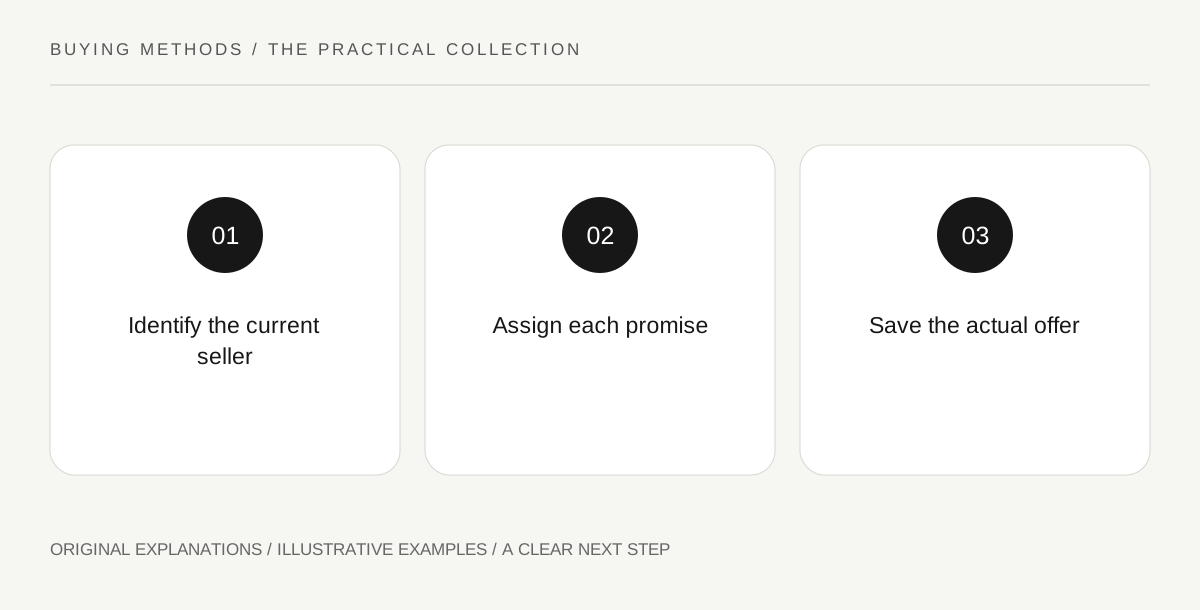
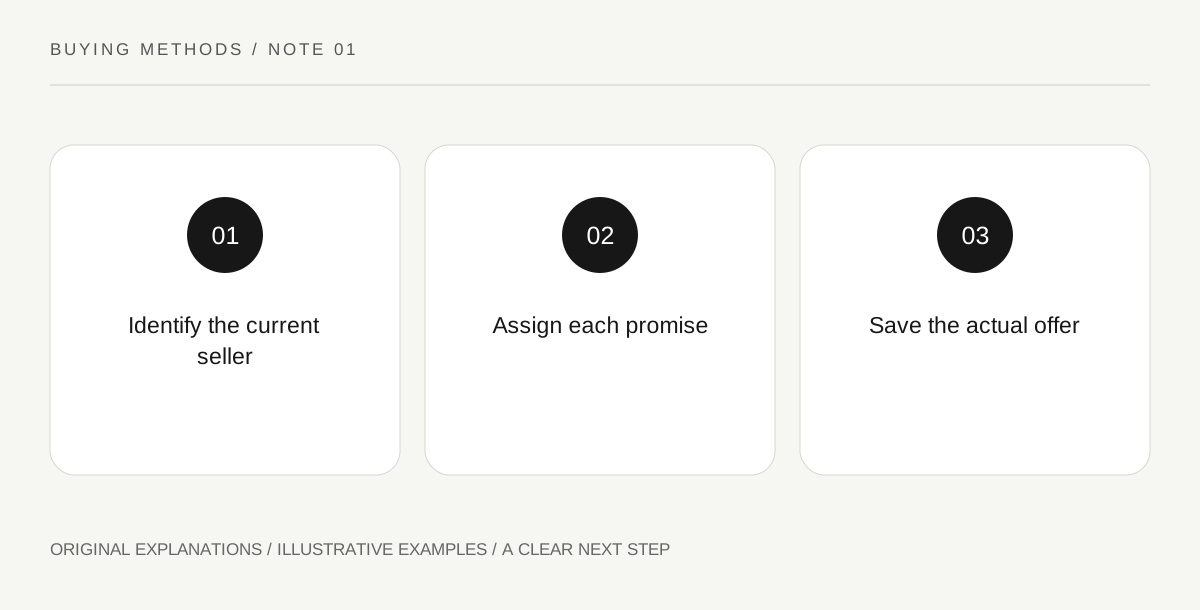
A familiar shopping platform can display an offer from a separate seller, while the manufacturer has another support role. Identify who is making each promise before comparing prices. This short map helps you understand returns, delivery and product support without assuming one recognizable logo handles everything.
Read the guide ↗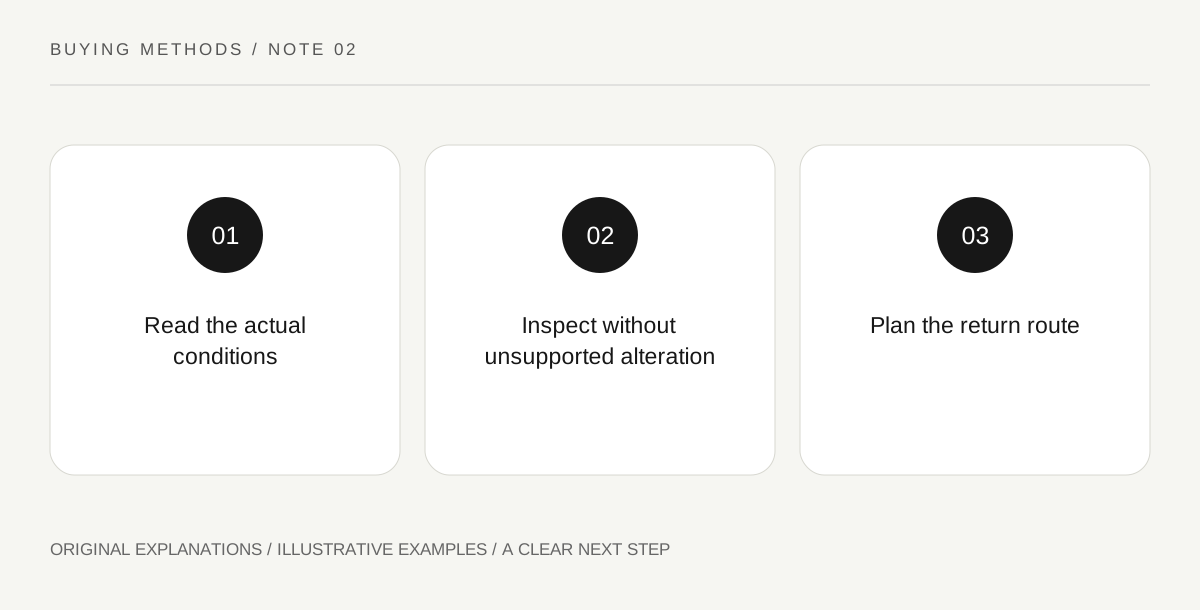
Ownership planning3 min read
A return policy is easier to use when its conditions are understood before packaging is discarded or setup begins. Read the route for the actual seller and product. Distinguish a change-of-mind return from a defective-product concern, and avoid assuming that every purchase carries the same deadline or remedy.
Read the guide ↗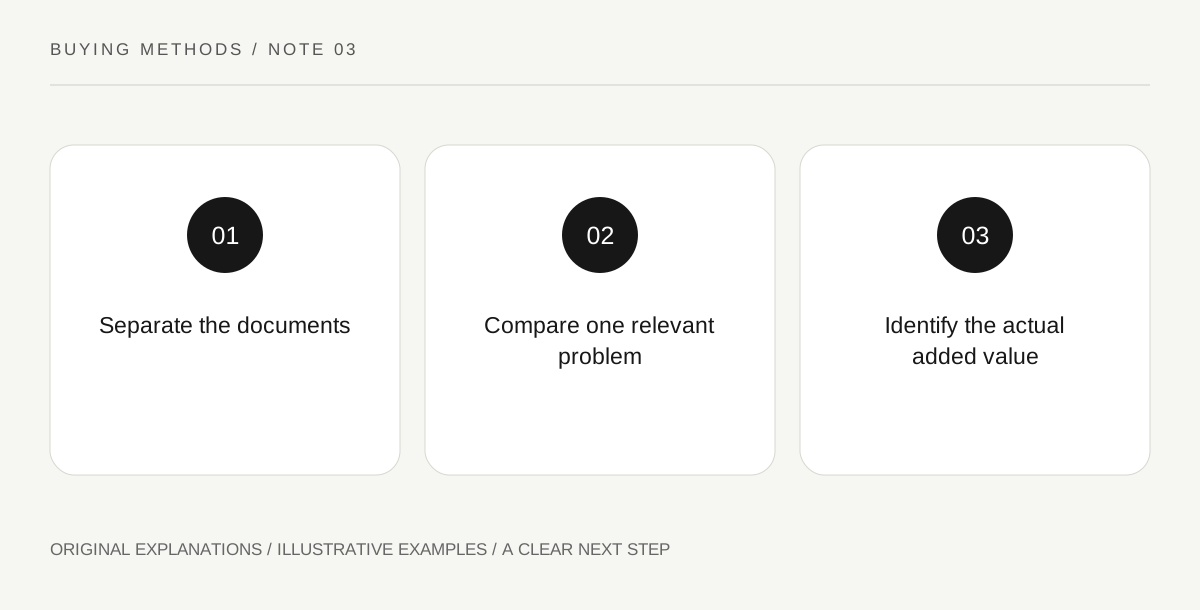
Offer reading3 min read
A paid protection offer can sound reassuring while duplicating coverage already included with a product. Compare the documents before deciding. Keep the included warranty, any separately sold service contract and the seller's return policy distinct, because they answer different questions about the purchase.
Read the guide ↗
Comparison methods3 min read
A five-star review may concern fast delivery while your question is whether a product fits a particular task. Sort reviews by what they can support before counting enthusiasm. The aim is useful evidence with limits, not a homemade detector that claims to identify every fake review by writing style.
Read the guide ↗
Comparison methods3 min read
Two listings can share a photograph and broad product name while differing in a suffix, package or supported market. Match the full identifier before comparing prices. A small text difference can affect the included components or required support, so leave unresolved variations visible instead of assuming equivalence.
Read the guide ↗
Comparison methods3 min read
A larger pack can have a lower unit price while costing more in the context of your own use. Calculate the comparable unit, then consider waste, storage and timing separately. The arithmetic should clarify the offer rather than turn every bulk discount into a reason to buy more.
Read the guide ↗
Comparison methods3 min read
A bundle can simplify a purchase or hide several objects you would never choose separately. List its actual components before assigning value to the discount. Keep necessary approved parts, optional conveniences and unwanted extras distinct, with the complete operating setup as the comparison target.
Read the guide ↗
Ownership planning3 min read
A low purchase price can sit beside recurring consumable, energy or service costs. Build a simple scenario using reliable product information and your own stated use assumptions. The result is an estimate to inspect, not a forecast that claims every household will experience the same cost.
Read the guide ↗
Ownership planning3 min read
A product can fit its intended room while its package cannot reach it easily. Review the delivery route before ordering a bulky item. Include door openings, turns, handling requirements and the seller's actual service boundaries, rather than treating a single destination measurement as a complete access plan.
Read the guide ↗
Offer reading3 min read
A refurbished label can describe different programs and conditions across sellers. Ask what the actual offer includes instead of treating the word as a universal quality grade. Keep cosmetic condition, functional checks, included parts and written coverage separate so each can be evaluated on its own evidence.
Read the guide ↗
Ownership planning3 min read
A product-safety notice may identify a model, component or production range more narrowly than the name printed on a storefront. Read the actual notice and match the specified information. Keep the remedy with the affected item rather than assuming that a familiar product name establishes either inclusion or exclusion.
Read the guide ↗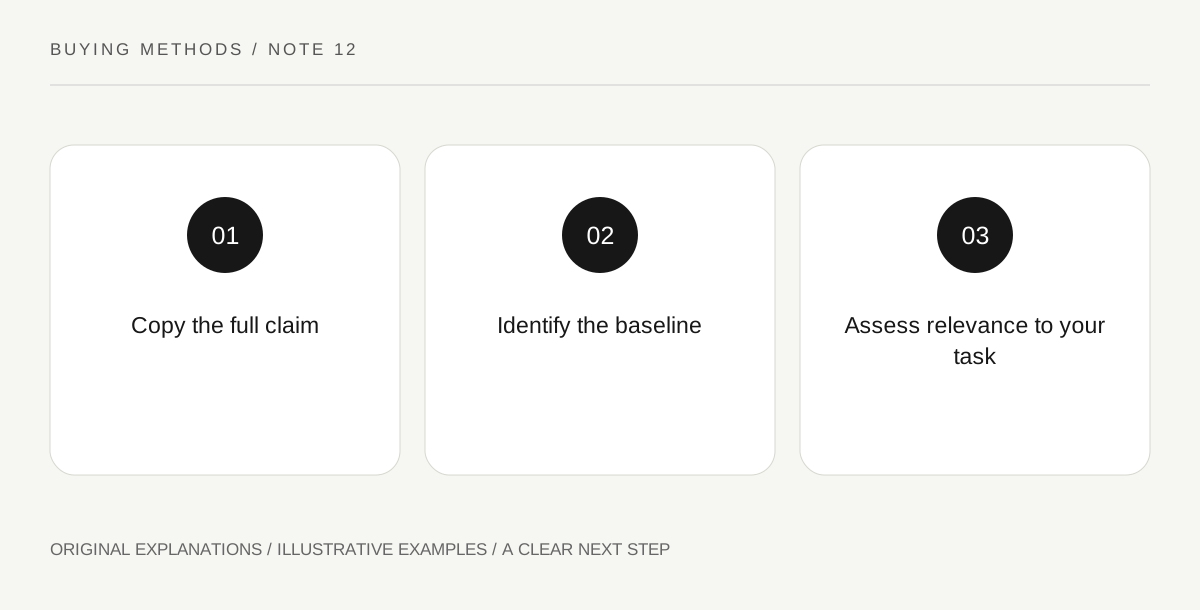
Offer reading3 min read
A claim that a product is faster, quieter or more efficient needs a comparison baseline to mean anything useful. Copy the complete statement and its conditions before deciding whether it answers your task. The exercise evaluates the information available, without declaring a named advertisement unlawful from a cropped screenshot.
Read the guide ↗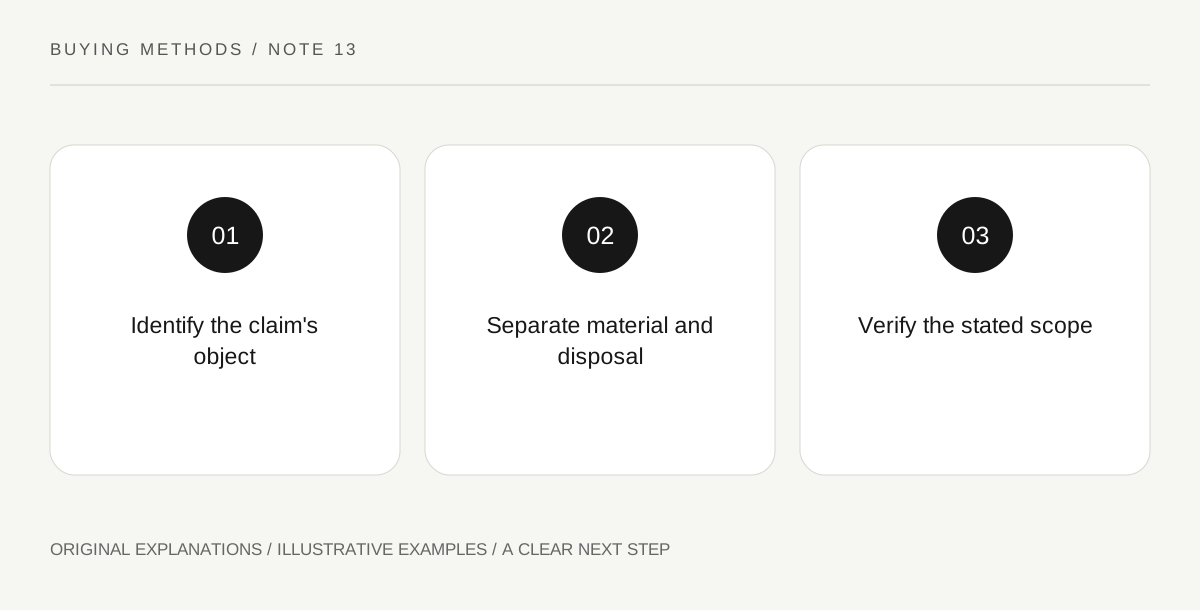
Offer reading3 min read
An environmental symbol can draw attention away from the precise claim beside it. Identify what the statement covers before treating it as a verdict on the entire purchase. Product material, packaging content and end-of-life instructions are different questions, each needing its own scope and evidence.
Read the guide ↗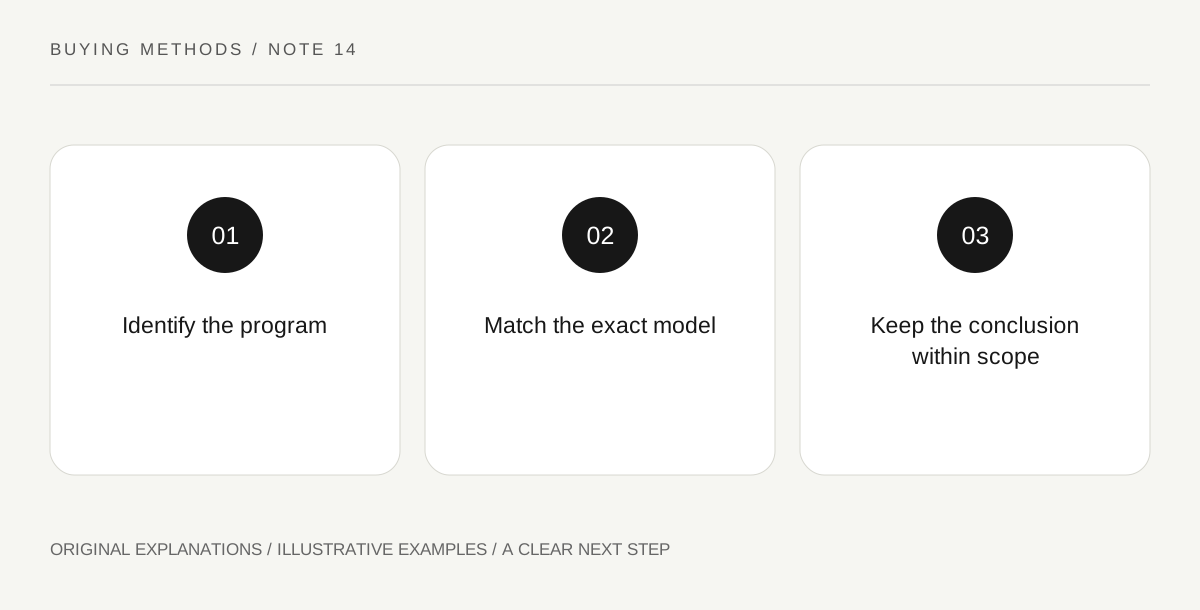
Comparison methods3 min read
A certification badge is useful when the product, program and claim line up. Check the exact model in the relevant official source rather than trusting a small logo in a marketplace image. Then keep the certification's defined scope separate from broader claims about durability, suitability or total ownership cost.
Read the guide ↗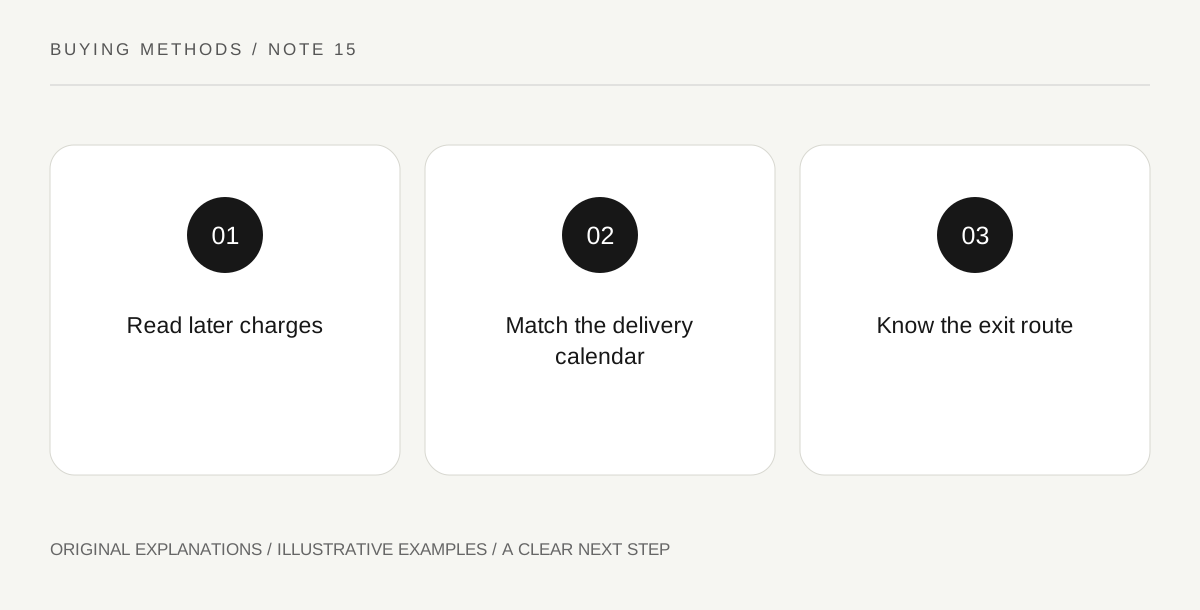
Ownership planning3 min read
A recurring shipment can be convenient when it matches real use, but the initial discount is only one part of the offer. Read the renewal price, delivery interval and cancellation process before enrolling. Treat the subscription as an ongoing arrangement rather than a cheaper version of one isolated purchase.
Read the guide ↗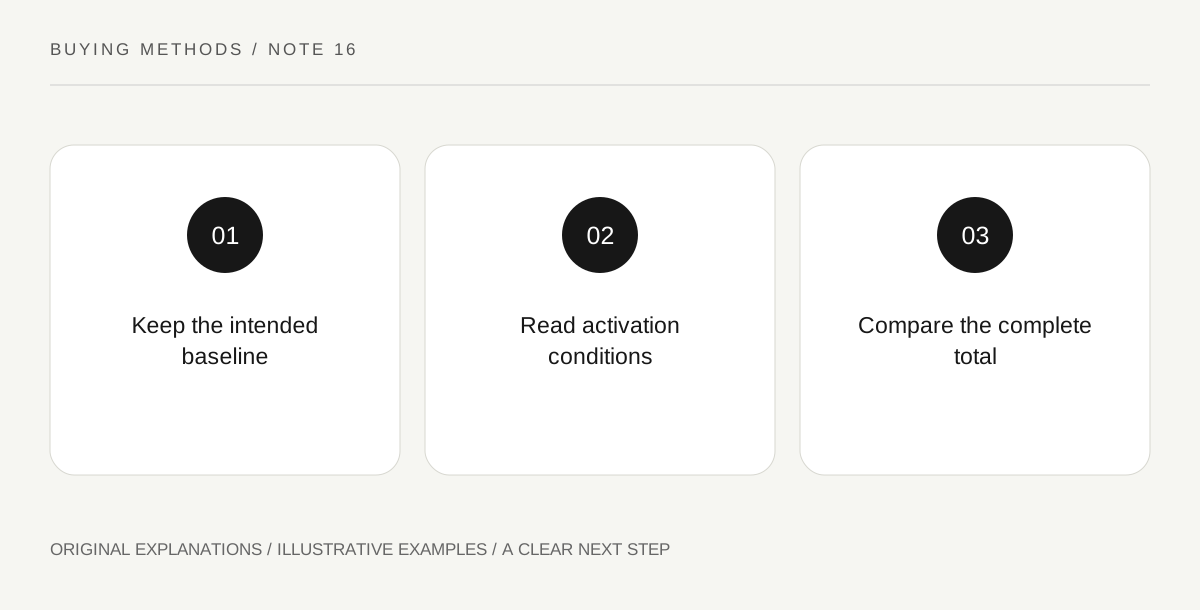
Offer reading3 min read
A coupon can feel like a saving while changing the basket into a larger purchase. Compare the final complete amount with the original intended order. Keep thresholds, delivery and optional extras visible so the discount does not quietly become the reason to buy an unrelated item.
Read the guide ↗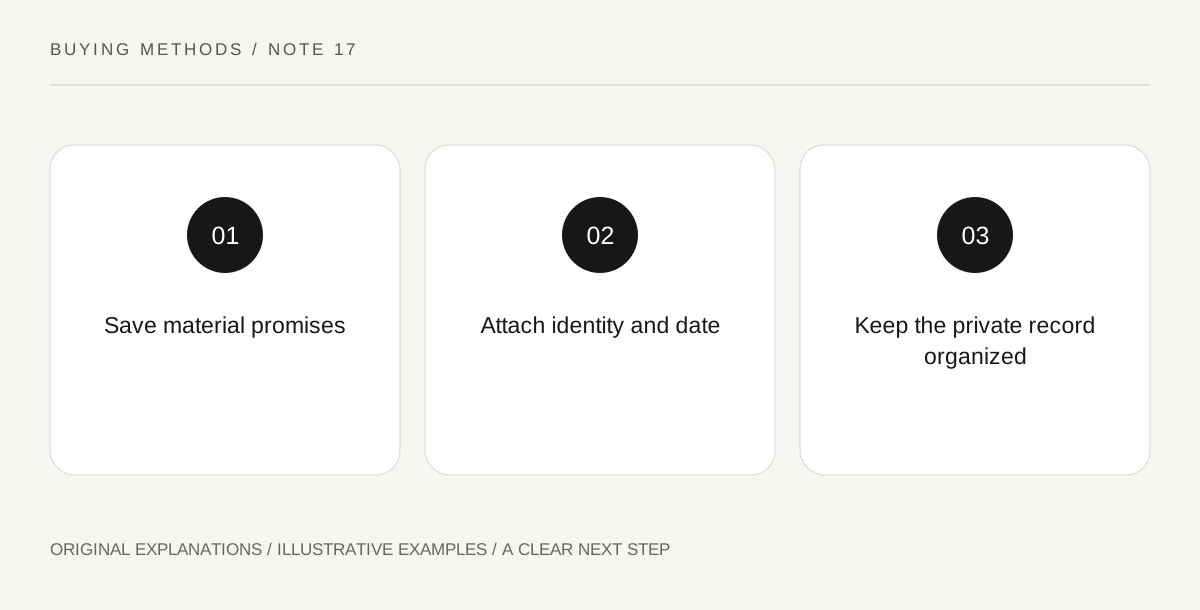
Purchase records3 min read
A screenshot can preserve an offer yet omit the identity or date needed to explain it later. Build a small purchase record around the actual promise, product and transaction. Keep the evidence useful and private, with enough context for a support conversation without collecting unnecessary personal data.
Read the guide ↗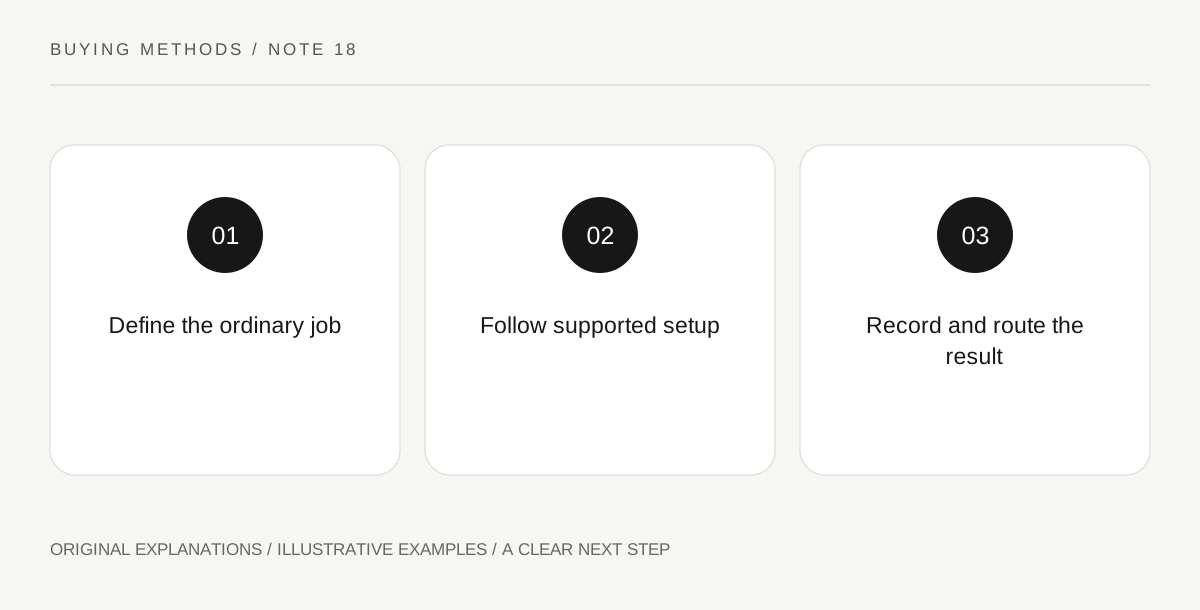
Ownership planning3 min read
A new product deserves a calm supported first-use check, especially when fit or compatibility matters. Choose one ordinary job, read the instructions and understand the seller's conditions before setup. The aim is to confirm the promised use, with a clear route for a mismatch or concerning behavior.
Read the guide ↗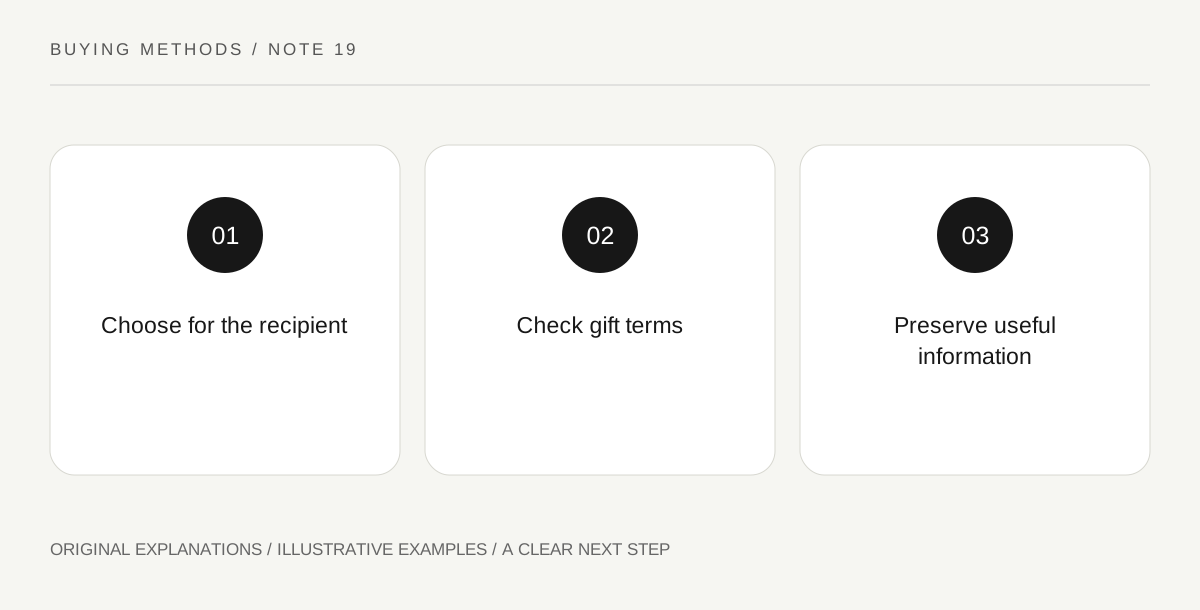
Purchase records3 min read
A gift becomes easier to use when the recipient can identify the item, follow its instructions and resolve a fit problem. Check those practical details before wrapping. Keep gift receipts, warranties and original labels distinct so a thoughtful presentation does not remove information the recipient may need.
Read the guide ↗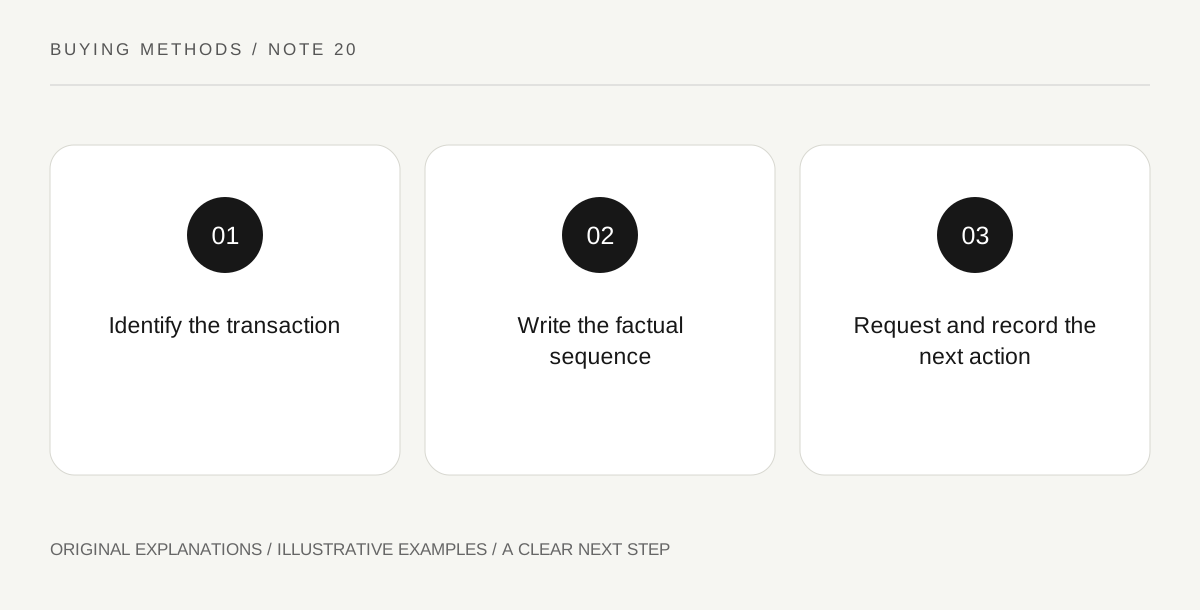
Purchase records3 min read
A support request is easier to assess when it explains what was ordered, what happened and what outcome is being requested. Build a factual chronology before contacting the business through its verified route. Keep the evidence concise and relevant, without turning frustration into unsupported accusations.
Read the guide ↗