Read the return route before opening a product that may not fit
A return policy is easier to use when its conditions are understood before packaging is discarded or setup begins. Read the route for the actual seller and product. Distinguish a change-of-mind return from a defective-product concern, and avoid assuming that every purchase carries the same deadline or remedy.
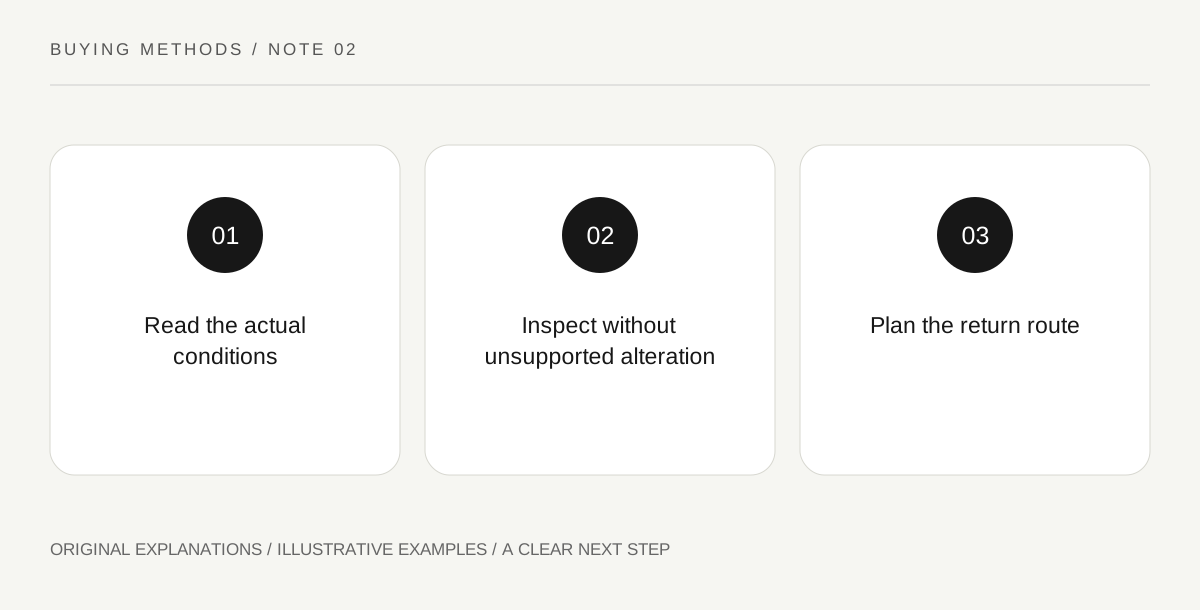
Original explanatory diagram. Read the full method and limitations below.
Identify the relevant policy version
Find the policy linked to the actual offer and save it with the date. A general retailer page may have product exclusions or seller-specific conditions. Look for the period, how it begins, the condition expected and any stated return costs. The FTC advises reviewing returns and keeping important purchase information. This is not a statement of every legal right in every location; local law and the exact transaction can add questions that require appropriate advice.
Separate inspection from irreversible changes
Before opening, think about what can be checked from the label and packaging: correct model, size, color or visible shipping damage. Then read how the seller permits a fit or function assessment. Do not remove protective elements, register irreversible services or alter a product just to perform a trial you have not checked. If a safety issue is apparent, stop using the item and follow the appropriate manufacturer or recall route instead of experimenting to prove the fault.
Plan the practical return journey
Identify whether a return needs authorization, a specified carrier, original accessories or another stated step. Keep necessary packaging and components organized while the decision remains open. A large object can be expensive or awkward to repack even when the policy allows a return. Ask about unresolved logistics before purchase, especially delivery pickup or handling requirements. Do not assume that free delivery also means free collection of an unwanted item.
Record the decision before the window closes
Set a reminder linked to the actual policy rather than a guessed universal thirty-day rule. Complete the supported inspection promptly enough to address a problem. Keep a factual record of what you found and which route applies. A refund, repair, exchange or other resolution depends on the terms and relevant law; a notebook cannot guarantee the outcome. If the situation is unclear, seek the seller's written explanation and appropriate consumer guidance.
Illustrative worked example
Illustrative scenario: a shopper orders a small countertop item whose dimensions may be tight. They read the actual return conditions and keep the packaging while checking the correct model and permitted fit assessment. A reminder uses the policy's own date rule. When the item does not suit the intended space, the shopper follows the stated route without assuming that a return label is automatically free.
Questions that come up
Is every online purchase refundable for any reason?
Do not assume a universal rule. Read the transaction terms and relevant local consumer guidance, distinguishing an unwanted item from a defective-product issue.
Can I discard all packaging immediately?
Check the actual conditions and practical needs first. Keeping necessary packaging temporarily can make a permitted return manageable, especially for awkward or fragile items.
References and scope
These sources support the factual background. Examples and exercises are original illustrative teaching material. References do not imply endorsement.
- FTC: Online Shopping — Compare sellers, products and terms and keep purchase records; no universal refund entitlement is inferred.
- FTC: Resolving Problems with a Business — Keep relevant records and use appropriate business support and consumer resources when a problem remains unresolved.