Describe a product problem with a short chronology and a specific requested resolution
A support request is easier to assess when it explains what was ordered, what happened and what outcome is being requested. Build a factual chronology before contacting the business through its verified route. Keep the evidence concise and relevant, without turning frustration into unsupported accusations.
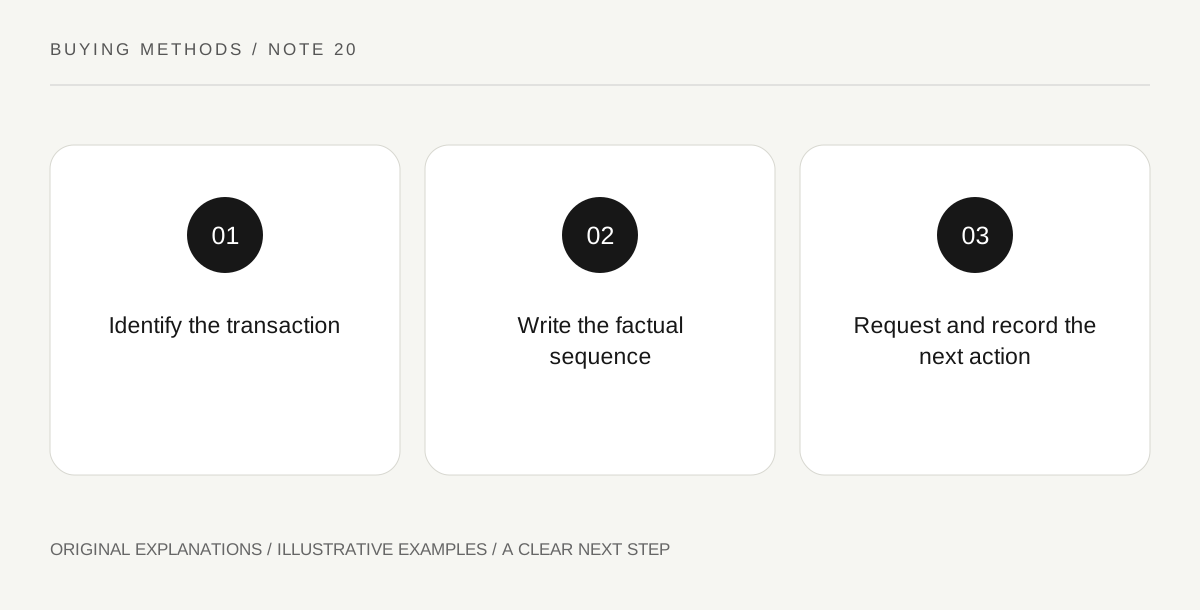
Original explanatory diagram. Read the full method and limitations below.
Identify the transaction and product
Write the order date, actual seller, product identifier and relevant purchase reference. Keep payment secrets and unrelated personal details out of a draft intended for sharing. Link the material promise or document if it explains the issue. The FTC's problem-resolution guidance emphasizes useful records and the appropriate business contact. A clear identity prevents the conversation from beginning with avoidable confusion about a different seller, model or variation.
Describe events in observable order
List delivery, supported setup, the first observed problem and any response already received. Separate what you saw from what you believe caused it. The closure would not latch with the documented load is more informative than the company deliberately sold junk. Include photographs or messages only when they clarify a relevant point. Do not repeat unsafe operation to produce more dramatic evidence, and do not dismantle the product merely to prove an unverified explanation.
State a concrete request
Ask for the appropriate clarification or resolution based on the actual terms and situation. You might seek confirmation of a missing component or the correct route for a faulty item. Avoid promising yourself a particular refund outcome before the business or relevant guidance has addressed the facts. Where legal rights are unclear, consult appropriate local consumer resources. A specific request gives the recipient something to answer and makes it easier to notice when a response fails to address the issue.
Keep the response trail organized
Record dates, reference numbers and the next agreed action. If the problem remains unresolved, follow appropriate escalation routes described by reliable consumer guidance rather than sending private information to unverified accounts. Keep any public review factual and based on your actual experience. A private chronology and a public opinion have different information needs. Close the record with the outcome actually achieved, including an unresolved status if that is the truth, rather than rewriting the history to make the process appear successful.
Illustrative worked example
Illustrative scenario: a buyer receives a package missing a listed part. Their draft identifies the order, quotes the relevant included-parts statement, lists the delivery date and asks for the seller's resolution route. They attach one useful image through verified support and keep the case reference. The request avoids guessing why the omission happened and records the actual answer when it arrives.
Questions that come up
Should I include every screenshot I have?
Choose evidence that helps explain the actual issue. Large unrelated attachments can obscure the key facts and expose unnecessary personal information.
Can a strong complaint guarantee the result I want?
No. Clear records can support a fair assessment, while the outcome depends on the facts, terms, applicable rights and available resolution routes.
References and scope
These sources support the factual background. Examples and exercises are original illustrative teaching material. References do not imply endorsement.
- FTC: Resolving Problems with a Business — Keep relevant records and use appropriate business support and consumer resources when a problem remains unresolved.
- FTC: Online Shopping — Compare sellers, products and terms and keep purchase records; no universal refund entitlement is inferred.