Map the seller, platform and manufacturer before an online purchase
A familiar shopping platform can display an offer from a separate seller, while the manufacturer has another support role. Identify who is making each promise before comparing prices. This short map helps you understand returns, delivery and product support without assuming one recognizable logo handles everything.
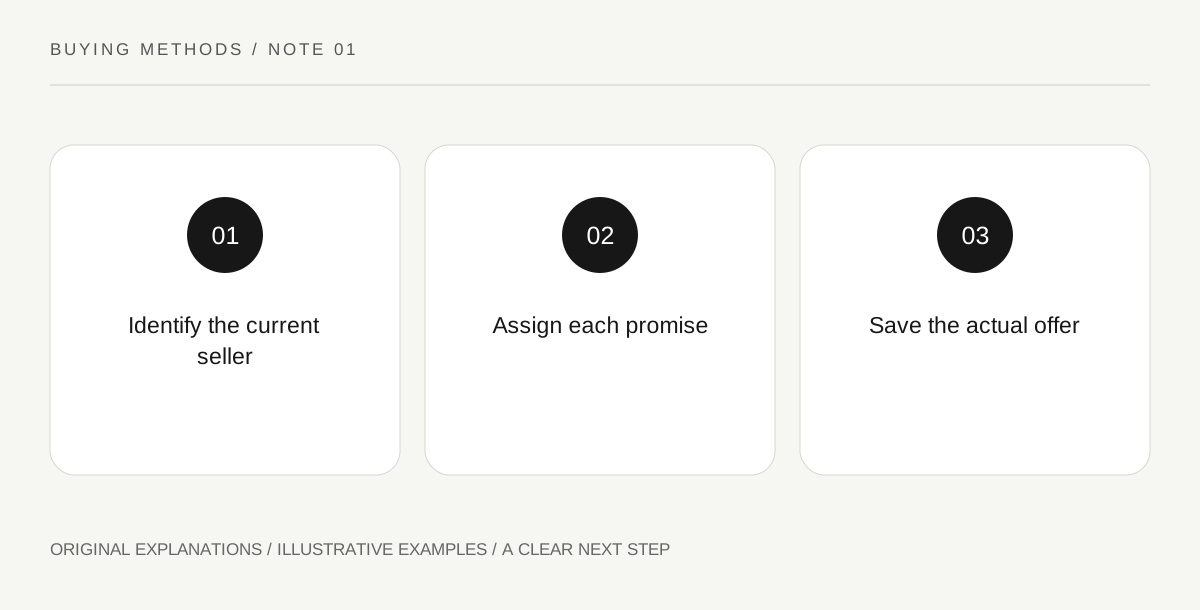
Original explanatory diagram. Read the full method and limitations below.
Read the actual offer identity
Find the seller named beside the current offer and distinguish it from the platform hosting the page. A product can have several offers under one shared description. Record the specific seller and the condition being offered, not only the product title. The FTC recommends checking sellers and purchase terms when shopping online. A familiar platform is useful context, but it does not independently establish every seller's policies or the contents of a particular package.
Assign each promise to a party
Write who handles dispatch, returns and any stated warranty support. These roles may coincide or differ. A platform's customer-service page and a manufacturer's warranty page can describe separate processes. Do not merge them into one imagined guarantee. If the offer is unclear, ask through a verified official route before payment. A concise question about who receives a return is more useful than a general request to confirm that the purchase is protected.
Compare complete offers rather than headline prices
Keep item price, shipping, disclosed charges, condition and included parts together. A cheaper offer may omit an accessory or use a different return arrangement. That does not automatically make it dishonest, but it changes the comparison. Use the final review screen to confirm the seller has not changed when selecting a delivery option or variation. Avoid treating an earlier screenshot as the current order if the actual checkout identifies another party.
Keep a small evidence package
Save the offer identity, important terms and confirmation in a private purchase folder. Include the date and product identifier so the record remains understandable after a page changes. Do not store unnecessary payment secrets or send a full personal account screenshot to strangers. If a problem occurs, the map helps direct the first inquiry to the appropriate business. It is a preparation tool, not a promise that every dispute will have the same outcome.
Illustrative worked example
Illustrative scenario: a shopper compares two offers for the same appliance accessory. One is dispatched by the platform but sold by a separate business; the other comes directly from the manufacturer. They record the different return routes and included parts before choosing. The lower price is considered alongside the actual offer, rather than being treated as an identical transaction because the product image matches.
Questions that come up
Does fulfilled by mean manufactured by?
No such identity follows from the phrase alone. Read the actual seller, product and fulfillment details rather than merging the businesses' roles.
Should I contact every party before buying?
Only resolve material uncertainties. A clear offer may answer the relevant questions already; the purpose is an understandable purchase, not unnecessary correspondence.
References and scope
These sources support the factual background. Examples and exercises are original illustrative teaching material. References do not imply endorsement.
- FTC: Online Shopping — Compare sellers, products and terms and keep purchase records; no universal refund entitlement is inferred.
- FTC: Resolving Problems with a Business — Keep relevant records and use appropriate business support and consumer resources when a problem remains unresolved.