Put the included warranty and paid service contract in separate columns
A paid protection offer can sound reassuring while duplicating coverage already included with a product. Compare the documents before deciding. Keep the included warranty, any separately sold service contract and the seller's return policy distinct, because they answer different questions about the purchase.
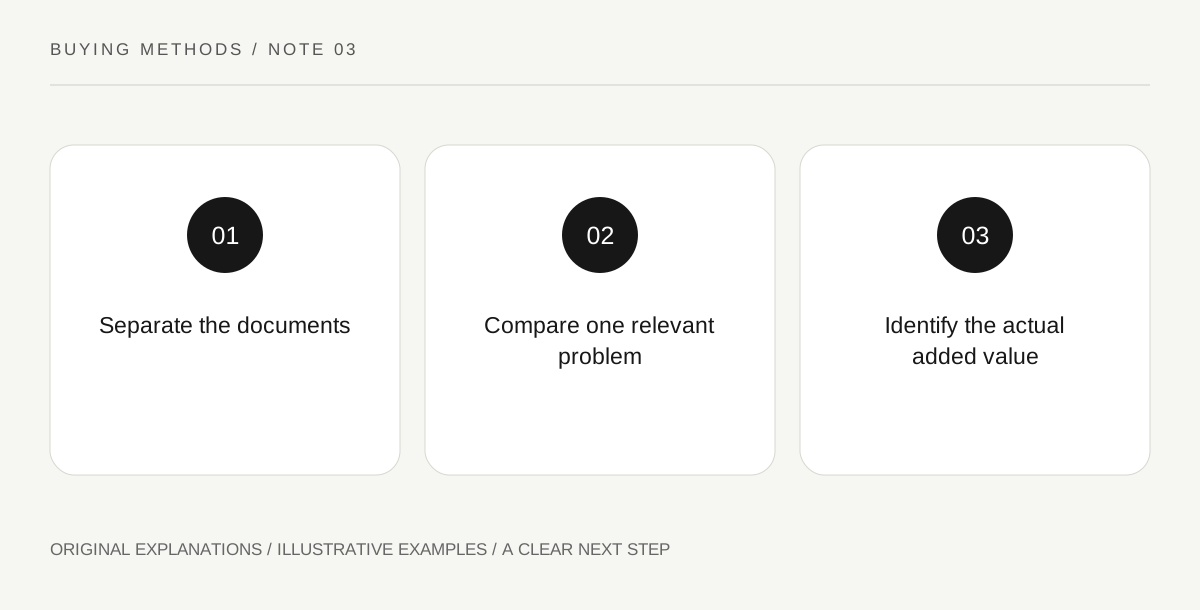
Original explanatory diagram. Read the full method and limitations below.
Identify what is included without an extra purchase
The FTC distinguishes a warranty that may accompany a product from a separately sold extended warranty or service contract. Obtain the actual written documents before comparing coverage. Record who provides each promise and the exact product covered. A badge saying protected is not a substitute for the terms. Avoid assuming that the longest advertised duration covers every component or begins only after all other coverage ends.
Map the same possible problem across both documents
Choose an ordinary relevant failure and look for how each document treats it. Note exclusions, required steps and any stated service or shipping charges. If the terms overlap, mark the overlap rather than counting the same period twice. If one document does not answer the question, leave it unresolved and ask the provider. Do not invent a claim approval rate or repair cost from a seller's reassuring language.
Read the process as part of the coverage
Find where service takes place, how a claim begins and whether an authorization step is required. A coverage promise can be inconvenient if the actual route does not fit your circumstances. Keep the receipt, product identifier and document version together. Personal rights can depend on location and transaction details, so seek appropriate consumer or legal guidance for a dispute. This comparison exercise is not a universal interpretation of every warranty clause.
Decide on the added value rather than the label
Compare the extra price with the actual additional coverage and its practical requirements. You may buy it, decline it or pause the product purchase if the documents remain unclear. A sales deadline should not replace understanding. Avoid deciding solely from a frightening hypothetical repair bill or assuming that no product ever fails. The useful outcome is a bounded explanation of what the extra contract adds, including any overlap and uncertainty. Also check whether the named provider remains responsible if the retailer changes, and save the written explanation with the selected contract.
Illustrative worked example
Illustrative scenario: a shopper is offered a three-year paid plan for a household device. Comparing the documents shows that part of its period overlaps the included warranty, while its claim route has separate requirements. The shopper asks about the uncovered difference and chooses based on the actual added terms. No probability of failure or guaranteed financial saving is invented.
Questions that come up
Is an extended warranty always the same as the original warranty?
The FTC treats separately sold service contracts as distinct. Read the actual document rather than assuming the marketing name repeats all included coverage.
Does longer coverage automatically mean a better deal?
Duration is one dimension. Scope, exclusions, provider, process and price also matter, and unresolved terms should remain unresolved until clarified.
References and scope
These sources support the factual background. Examples and exercises are original illustrative teaching material. References do not imply endorsement.
- FTC: Warranties — Read written coverage and distinguish included warranty from separately sold service contracts; details vary.