Save purchase evidence that remains understandable after the page changes
A screenshot can preserve an offer yet omit the identity or date needed to explain it later. Build a small purchase record around the actual promise, product and transaction. Keep the evidence useful and private, with enough context for a support conversation without collecting unnecessary personal data.
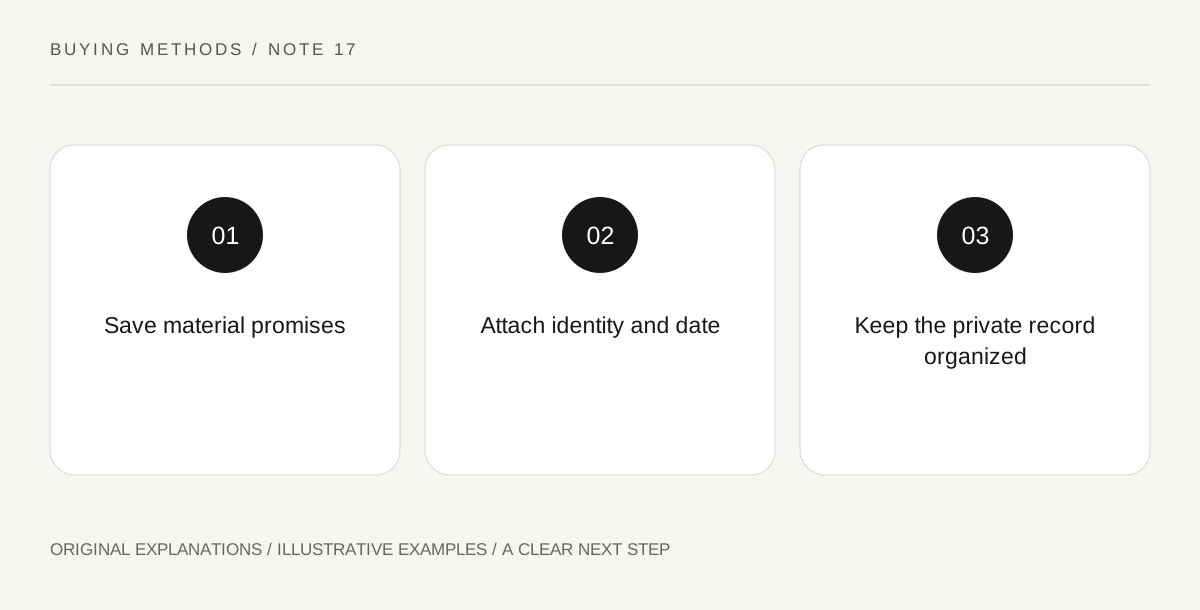
Original explanatory diagram. Read the full method and limitations below.
Choose the claims that matter
Save the model, selected variation, condition, included items, seller and material terms behind the decision. A broad lifestyle image may be attractive but contribute little to a later question about a missing component. Preserve relevant nearby qualifications with any headline claim. The FTC recommends keeping purchase records, and this focused approach makes that habit practical. Do not capture only the favorable sentence while excluding a condition that changes its meaning.
Keep date and source together
Record when the offer was viewed and where it appeared, using a clear file name or note. A page can change, and a product family may have several versions. Retain the selected offer rather than assuming a general manufacturer page represents the exact seller's package. If a support answer resolves a material uncertainty, keep the written answer with the question and product identity. An isolated yes message may be meaningless after the original conversation is forgotten.
Separate public information from transaction details
An offer record and an order confirmation serve different roles. Store them privately with the receipt and relevant document versions. Avoid retaining full payment credentials or spreading personal account screenshots across shared folders. When contacting support, provide the minimum appropriate information through a verified channel and redact unrelated personal details in copies. Clear evidence does not require exposing every order in the household or publishing a complete address beside a complaint.
Make the record easy to close
Use one folder or index for the purchase rather than several ambiguous downloads. After resolution or the relevant retention period for your circumstances, review what still needs to be kept. Do not delete a document merely because the product arrived if warranty or another important question remains. Conversely, a permanent archive of every promotional image can obscure the few records that matter. The useful package should let a future reader identify the item, promise, transaction and unresolved issue quickly.
Illustrative worked example
Illustrative scenario: a shopper saves a cropped image saying accessory included. Months later it lacks the model and seller context. For the next purchase they save the complete relevant section with the offer identity and date, then link it to the confirmation. If a component is missing, the support inquiry can refer to a clear documented promise without sharing unrelated account information.
Questions that come up
Is a screenshot enough to guarantee a refund?
No. It can support a factual account, while the outcome depends on the transaction, evidence, terms and applicable law.
Should I record every page of the store?
Focus on material product and transaction information. A concise well-labeled record is usually more usable than a large unsorted archive of unrelated pages.
References and scope
These sources support the factual background. Examples and exercises are original illustrative teaching material. References do not imply endorsement.
- FTC: Online Shopping — Compare sellers, products and terms and keep purchase records; no universal refund entitlement is inferred.
- FTC: Resolving Problems with a Business — Keep relevant records and use appropriate business support and consumer resources when a problem remains unresolved.