Match the full model suffix before calling two offers identical
Two listings can share a photograph and broad product name while differing in a suffix, package or supported market. Match the full identifier before comparing prices. A small text difference can affect the included components or required support, so leave unresolved variations visible instead of assuming equivalence.
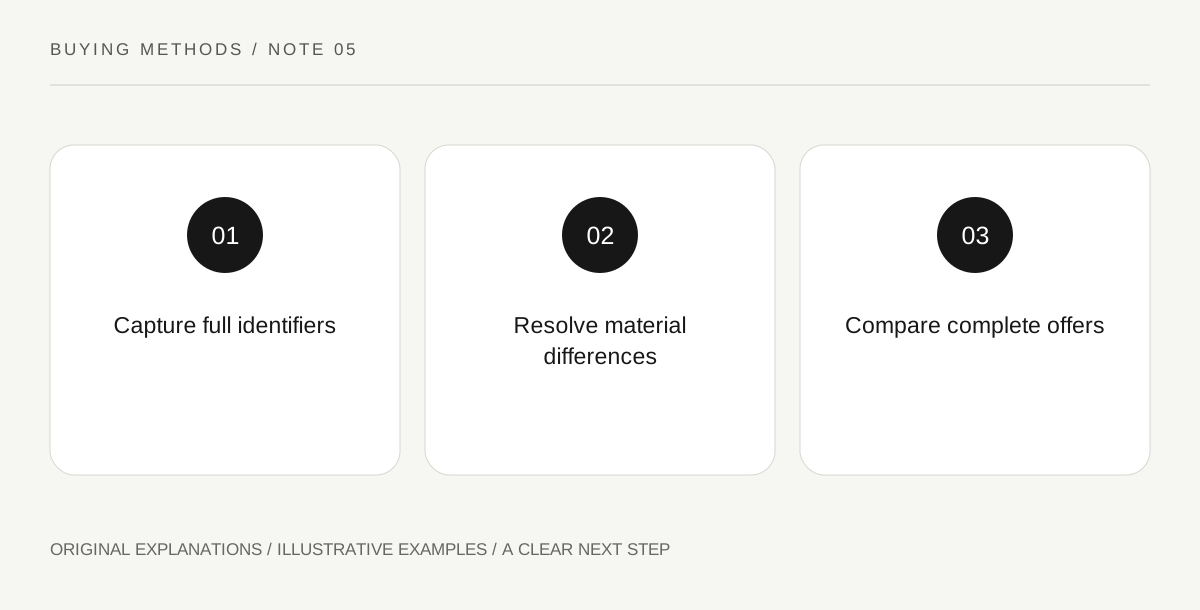
Original explanatory diagram. Read the full method and limitations below.
Capture the full identifier from each offer
Write the manufacturer, model and all visible suffixes, plus condition and package code if supplied. Compare the actual selected variation, not a page title that covers several choices. The FTC recommends checking product details when shopping online. A familiar image is only a visual reference. It cannot establish that two offers contain the same internal configuration, accessories or documentation, especially when a shared page combines several packages.
Ask the manufacturer what a difference means
Use the manufacturer's current product information or verified support route to resolve a material suffix difference. Do not guess that a letter indicates a region, color or generation merely because it did so for another brand. Record the explanation and the exact products it covers. If reliable information is unavailable, keep the offers distinct. Unknown does not mean worse, but it does mean you lack a basis for declaring them interchangeable.
Check the package as well as the core item
List included parts and any necessary approved accessories. A lower price can reflect a bare item rather than a complete ready package. Conversely, a bundle can add objects you do not need. Keep compatibility and safe operation within the manufacturer's instructions rather than treating a physically similar connector as sufficient. Product identity, package contents and operating requirements should each have a clear line in the comparison.
Compare only after the material differences are clear
Place complete prices beside the matched specifications and relevant seller terms. If the products are genuinely equivalent for your purpose, price may become a useful deciding factor. If they differ, describe the tradeoff honestly rather than calling the more expensive offer overpriced. Save the selected offer and confirmation so the delivered label can be checked on arrival. Resolve a mismatch before setup instead of hoping the difference will turn out to be cosmetic. Keep any written compatibility confirmation with that exact identifier for future accessory purchases.
Illustrative worked example
Illustrative scenario: two listings show the same device photograph, but one identifier ends with a different package code. The manufacturer's documentation shows that the packages include different approved accessories. The shopper compares the actual complete setups and seller terms rather than the device price alone. On delivery they check the identifier against the saved order before beginning use.
Questions that come up
Can identical photographs prove identical products?
No. Shared or representative images may cover several variants. Use the full identifiers and reliable product information.
Should every suffix difference stop a purchase?
Only material uncertainty needs resolution. A verified cosmetic difference may be irrelevant to your task, while an unexplained operating or package difference deserves clarification.
References and scope
These sources support the factual background. Examples and exercises are original illustrative teaching material. References do not imply endorsement.
- FTC: Online Shopping — Compare sellers, products and terms and keep purchase records; no universal refund entitlement is inferred.