Design a first-use check around one ordinary job and a clear stopping point
A new product deserves a calm supported first-use check, especially when fit or compatibility matters. Choose one ordinary job, read the instructions and understand the seller's conditions before setup. The aim is to confirm the promised use, with a clear route for a mismatch or concerning behavior.
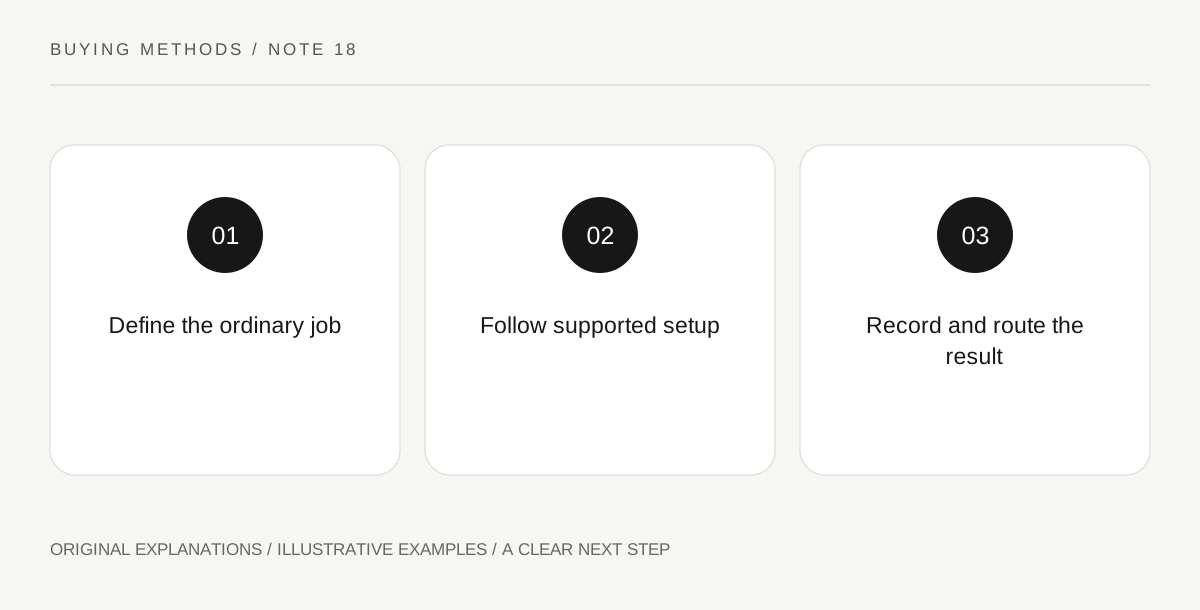
Original explanatory diagram. Read the full method and limitations below.
Define an observable result
Write the task the product should support and what would count as a useful result. For a storage accessory, that might be accepting the intended contents without obstructing closure; for a supported device, it might be completing the documented connection sequence. Keep the goal within the manufacturer's intended use. A vague desire to see whether it is good encourages aimless experimentation. A clear result helps distinguish an actual mismatch from unfamiliar controls or an optional feature you do not need.
Read before changing the environment
Check required accessories, setup conditions and warnings. Identify any action that is irreversible or affects return arrangements and resolve it beforehand. The FTC recommends understanding product and seller terms; the first-use plan connects those terms with ordinary handling. Do not dismantle equipment, bypass safety functions or use incompatible power or attachments to see what happens. If installation requires qualified help, arrange that route rather than turning the trial into an improvised technical project.
Observe one complete supported sequence
Follow the instructions calmly and record the relevant result. If something fails, note the stage and any message rather than repeatedly forcing the same action. Stop for damage, unexpected heat, electrical concerns or another safety issue and use appropriate guidance. A product appearing to work once does not certify every aspect of its safety or long-term reliability. The observation is limited to the task and conditions you actually checked.
Choose the next route explicitly
If the result meets the task, keep the useful setup note and complete appropriate care. If it does not, identify whether the issue calls for a documented setup clarification, seller resolution or another product. Preserve relevant evidence without exposing private data. Do not keep a poor fit merely because several hours have already been spent on setup. The first-use check should make ownership clearer, including the possibility that a permitted return or another appropriate resolution is the right outcome.
Illustrative worked example
Illustrative scenario: a buyer needs an accessory to hold a known set of objects with its closure working normally. Before use they read the instructions and return conditions, then test the actual ordinary load without forcing the material. The closure remains obstructed, so they document the mismatch and use the seller's stated route. They do not modify the product to make a preferred purchase appear successful.
Questions that come up
Should I stress-test a product at home?
Use only supported checks relevant to ordinary operation. A consumer first-use assessment is not a destructive test or a homemade safety certification.
Can one successful trial prove years of reliability?
No. It establishes a limited observation under the checked conditions. Keep durability promises tied to reliable evidence and actual written terms.
References and scope
These sources support the factual background. Examples and exercises are original illustrative teaching material. References do not imply endorsement.
- FTC: Online Shopping — Compare sellers, products and terms and keep purchase records; no universal refund entitlement is inferred.
- FTC: Warranties — Read written coverage and distinguish included warranty from separately sold service contracts; details vary.
- FTC: Resolving Problems with a Business — Keep relevant records and use appropriate business support and consumer resources when a problem remains unresolved.